Business Website or Website with AI Integration: Which One Does Your Business Need?
Should your business start with a traditional website or invest in AI integration? Understand the differences, practical benefits, costs to consider, and how to choose the right option for your business.
- Author
- Hasnain Ansari
- Published
- Reading time
- 5 min read
Business Website or Website with AI Integration: Which One Does Your Business Need?
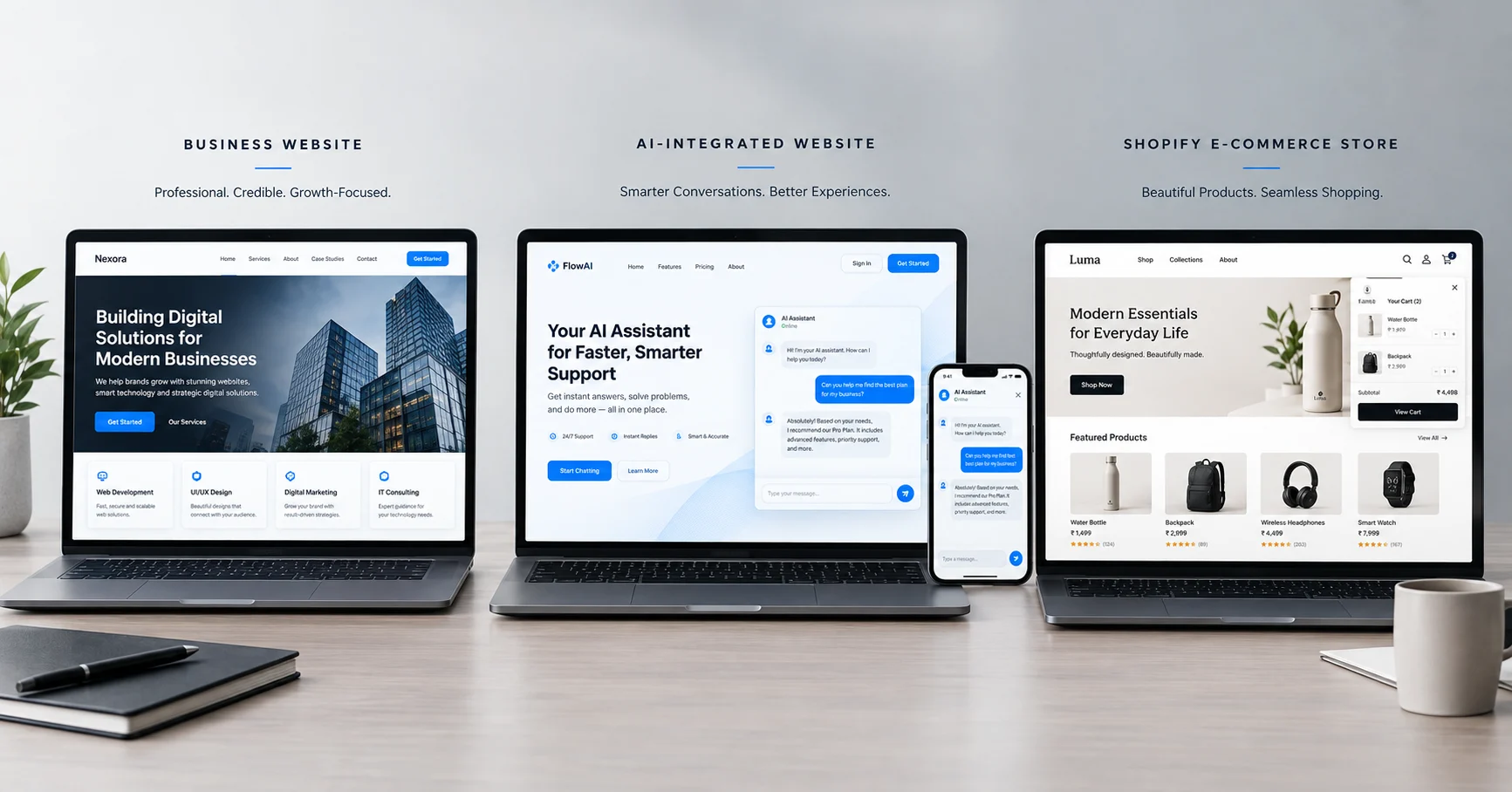
Every business needs a way for people to find it, understand its services, and get in touch. A website can do that job well without complicated technology. But as customer expectations change, some businesses are exploring AI features to answer questions, handle enquiries, and automate repetitive tasks.
So, should you build a standard business website or invest in one with AI integration?
The answer depends on what your business needs today—not simply on which option sounds more advanced.
1. What Does a Traditional Business Website Offer?
A traditional business website provides the essential information customers need before making a decision.
It might include a homepage, services, About page, portfolio, testimonials, contact form, and links to your social media profiles. An online store may also include product pages, a shopping cart, and checkout.
A well-built website should be responsive, easy to navigate, fast enough for a good user experience, and structured so search engines can understand its content.
For many small businesses, this is a perfectly sensible starting point.
A traditional website may be enough if you want to:
Establish a professional online presence.
Explain your products or services.
Show your work and build customer trust.
Receive enquiries through a contact form or WhatsApp.
Help potential customers find you through Google.
You don't need AI simply because it is available. Your website should first solve a real business problem.
2. What Changes When You Add AI Integration?
An AI-integrated website includes one or more features that use artificial intelligence to perform specific tasks.
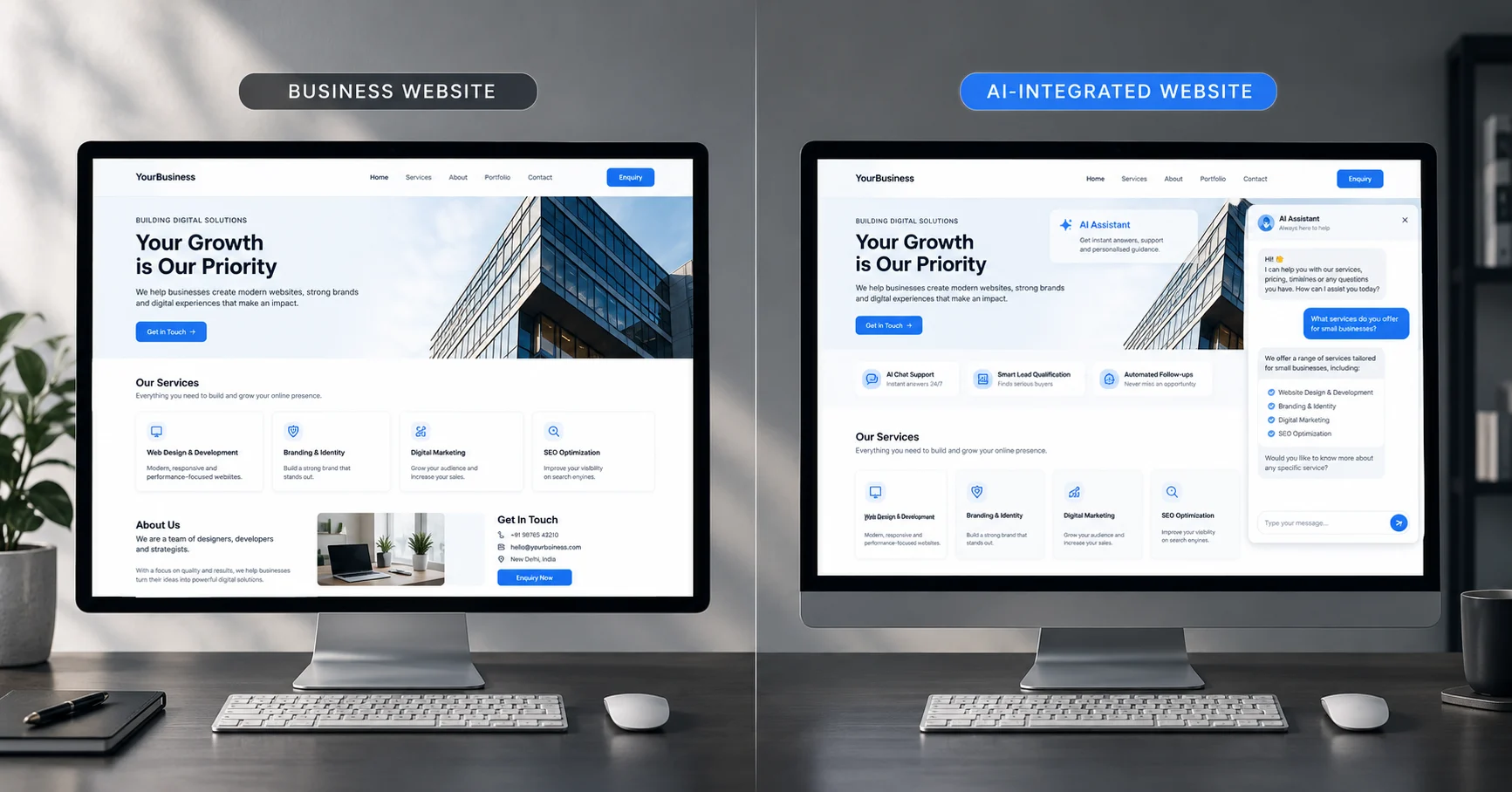
For example, a website could have an AI assistant that answers common questions using approved business information. It could help visitors identify the right service, collect enquiry details, or direct them to relevant pages.
Other possibilities include AI-powered product recommendations, document processing, or tools that help staff manage incoming requests.
However, AI integration is not just adding a chatbot to a homepage. Depending on the feature, it may require an AI service, backend logic, data connections, access controls, testing, and ongoing monitoring.
The right implementation depends on the task and the information the AI is allowed to use.
3. Traditional Website vs AI-Integrated Website
FeatureTraditional websiteWebsite with AI integrationBusiness informationStatic pages managed by the businessCan also provide AI-assisted answersCustomer enquiriesContact forms, email, phone, or WhatsAppMay collect or qualify enquiries conversationallyCustomer supportFAQs and manual responsesCan automate some routine questionsPersonalisationUsually based on predefined rulesMay offer AI-assisted recommendationsDevelopment complexityDepends on the site's featuresOften higher when AI, backend, and data connections are neededOngoing costsHosting, maintenance, and other servicesMay also include AI usage and monitoring costs
Neither option is automatically better. A traditional website can be highly effective, while an AI-integrated website can add value when its features are designed around a genuine need.
4. When Does AI Integration Make Sense?
AI becomes more useful when it solves a repeated problem rather than simply adding another feature.
For service businesses: An AI assistant could answer basic questions about services, working hours, or the enquiry process before directing visitors to a contact form.
For e-commerce stores: AI may help shoppers discover products or find answers about product details, provided the information is accurate and up to date.
For businesses handling many enquiries: An AI-assisted workflow could organise incoming requests or collect relevant details before a team member responds.
For internal business tools: AI can support tasks such as summarising information, searching documents, or helping staff navigate complex workflows.
These features need clear boundaries. An AI assistant should not invent prices, promise unavailable services, or make important business decisions without appropriate controls.
5. Consider the Cost Before Choosing
A standard website and an AI-integrated website can have very different costs depending on scope.
A basic website may mainly require design, development, hosting, and maintenance. AI features can add expenses for API usage, third-party services, database work, security, testing, and ongoing monitoring.
The cost also depends on what the AI actually does. A simple assistant that answers questions from approved information is different from a system that connects to business records, updates orders, or triggers automated workflows.
Before investing, ask:
What specific task will AI handle?
How much time or effort could it reasonably save?
What happens when the AI gives an incorrect answer?
Will the business need to pay recurring usage fees?
Can the feature be added later if the need becomes clear?
Start with a defined use case and a realistic budget rather than building an elaborate system without evidence that customers or staff need it.
6. Don't Ignore the Website Fundamentals
AI cannot compensate for a confusing website, unclear service descriptions, slow pages, or a broken contact form.
Before adding advanced features, make sure your website has a clear structure, useful content, responsive layouts, accessible navigation, reliable forms, and appropriate SEO foundations.
You should also make it easy for visitors to reach a human when their question requires judgement or personal assistance.
If you add AI, explain what it can do, protect any personal information it processes, and test how it responds to unexpected questions. Avoid sending sensitive information to third-party services without understanding the data-handling implications.
7. Which Option Should Your Business Choose?
If you're launching a new business or building your first website, begin with the features your customers actually need.
A traditional website is a reasonable choice when your main goals are visibility, credibility, service information, and enquiries.
An AI-integrated website is worth considering when you have a clear use case—for example, handling repetitive questions, guiding visitors through product choices, or supporting an established workflow.
You can also take a phased approach: launch a strong website first, observe how customers use it, and introduce AI where it can solve a measurable problem.
Final Thoughts
The choice isn't really between an old-fashioned website and a modern AI website. It's about choosing the right level of functionality for your business.
A clear, reliable website is the foundation. AI is an additional tool that can improve particular experiences or workflows when implemented thoughtfully.
Start with the problem you want to solve, compare the ongoing costs, and build only what adds genuine value. That approach helps you invest in a website that serves your business instead of paying for features you may never use.
About the Author
Hasnain Ansari is an AI Creative Designer and Web Developer based in India, working across website design, frontend development, and AI-assisted digital experiences. Explore more articles on web development, design, and SEO at hasnainansari.in.