How to Hire a Freelance Web Designer in India for Clients Abroad
Looking to hire a freelance web designer in India for an international project? Learn how to assess portfolios, compare proposals, manage time zones, communicate clearly, and choose the right freelancer.
- Author
- Hasnain Ansari
- Published
- Reading time
- 4 min read
How to Hire a Freelance Web Designer in India for Clients Abroad
Hiring a freelance web designer doesn't have to mean finding someone in your own country. Many businesses work remotely with designers across borders, provided expectations, communication, and project responsibilities are clear.
India is one option for businesses looking for freelance web design support. But choosing the right person involves more than comparing prices. You need someone who understands your goals, can demonstrate relevant skills, and can deliver a website that works for your audience.
Here's what to look for when hiring a freelance web designer in India for an international project.
1. Start With What Your Website Needs
Before contacting freelancers, decide what you actually need built.
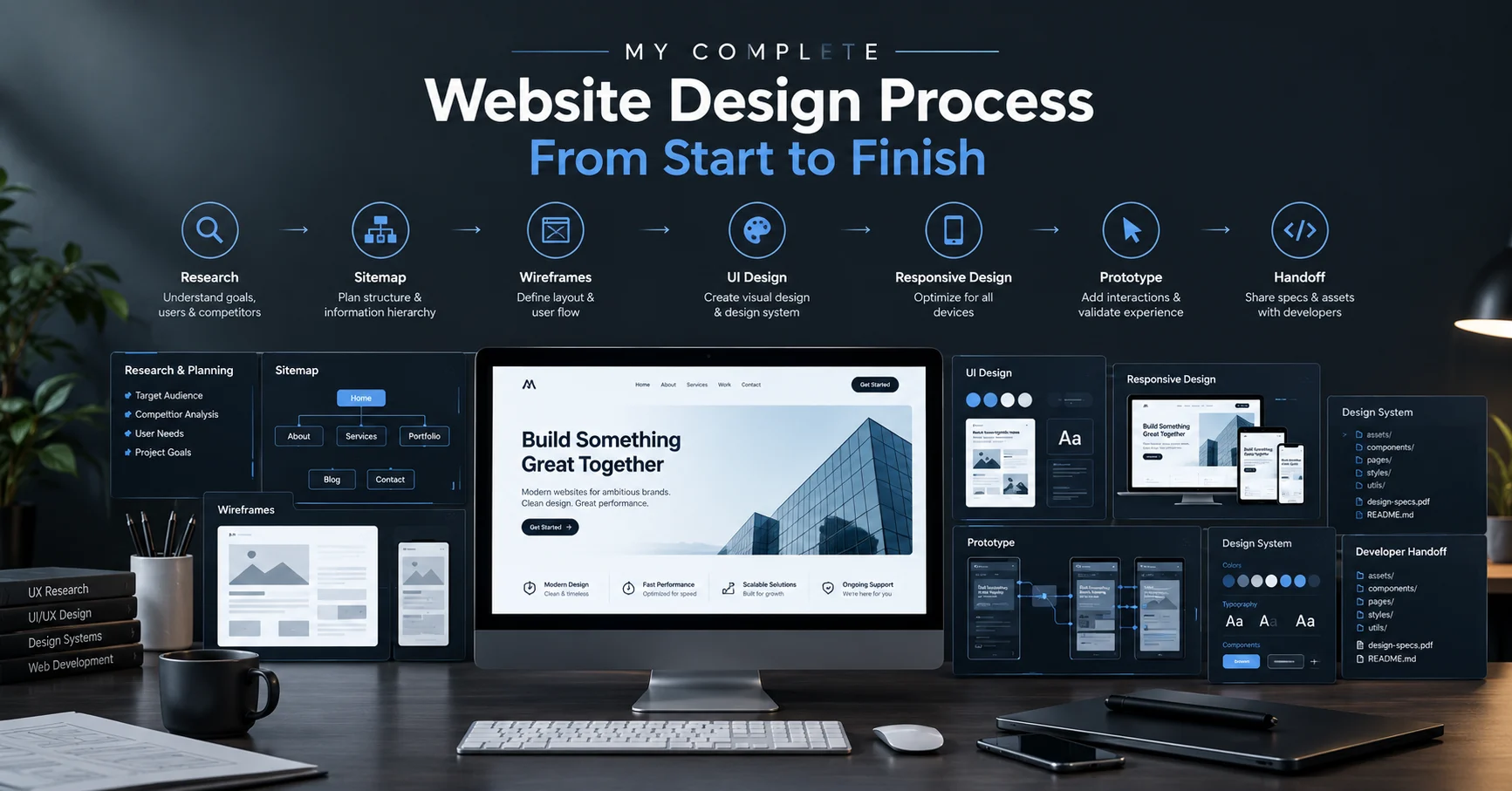
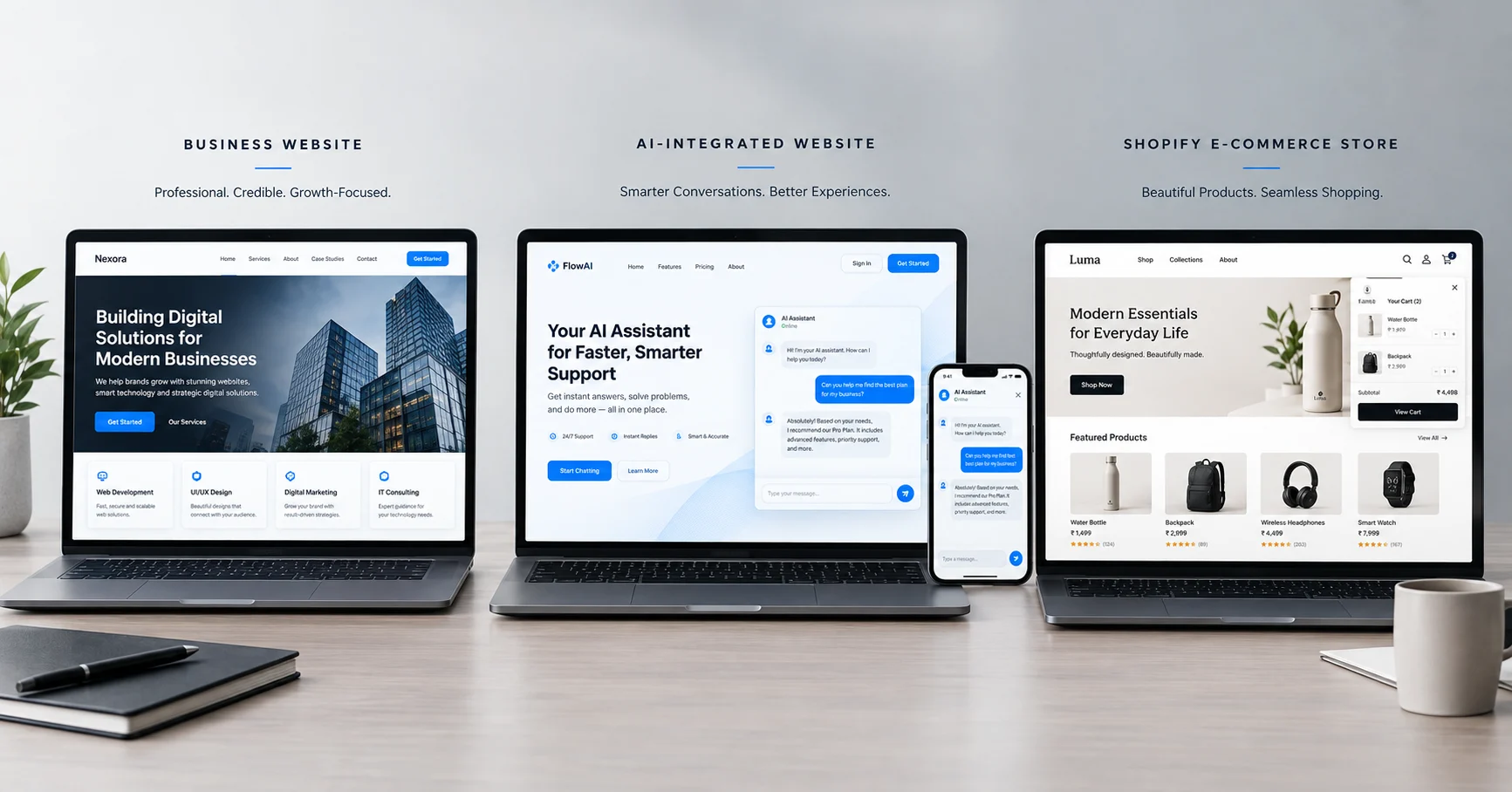
Are you looking for a business website, a landing page, an e-commerce store, or a redesign of an existing website? Do you need design only, or should the freelancer also handle development, responsive layouts, and deployment?
Write down the essential requirements, including the number of pages, important features, preferred platform, and expected launch date.
You don't need a complicated technical document. A clear project brief is enough to help freelancers understand the work and provide more useful proposals.
2. Review Their Portfolio, Not Just Their Claims
A portfolio gives you a better idea of how a designer approaches real projects.
Look for examples relevant to your business. If you need an e-commerce website, check whether the freelancer understands product pages, navigation, mobile shopping, and checkout journeys. For a service business, look for clear service descriptions, calls to action, and enquiry flows.
When reviewing a portfolio, ask:
Is the design easy to navigate?
Does it work well on mobile?
Are the projects explained clearly?
Can you visit live websites where available?
Does the work demonstrate the skills your project requires?
Also distinguish between live client work, personal projects, and design concepts. Each can demonstrate skills, but they provide different kinds of evidence.
3. Check Whether Their Skills Match Your Project
The term web designer can mean different things.
Some freelancers focus on visual design and tools such as Figma. Others also build websites using HTML, CSS, JavaScript, React, WordPress, Shopify, or other platforms.
Neither approach is automatically right for every project. What matters is whether the freelancer's skills match the work you need.
Before agreeing to a project, clarify who will handle development, domain and hosting setup, integrations, testing, and launch. If you need ongoing maintenance, discuss that separately.
4. Discuss Time Zones and Communication Early
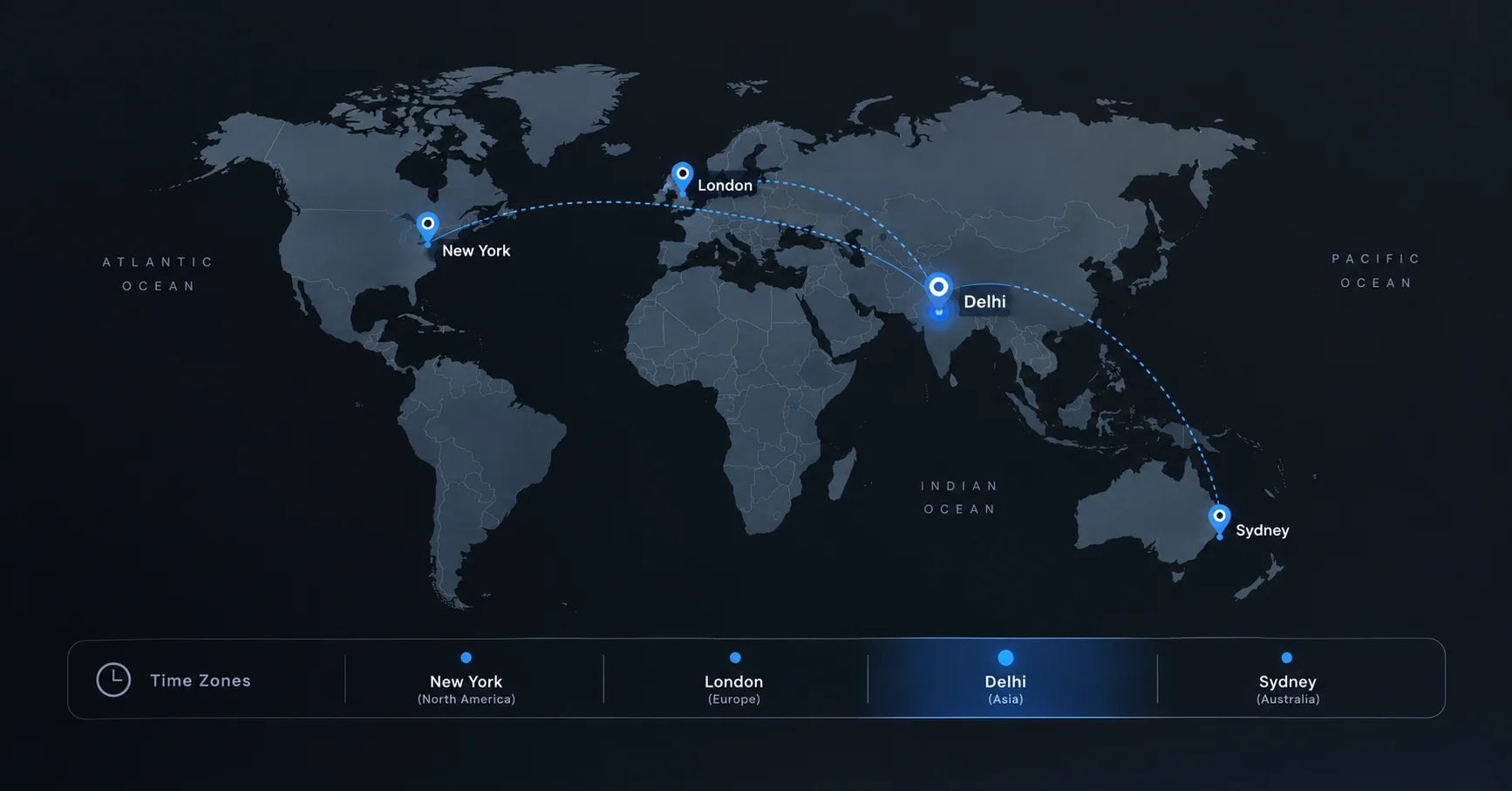
Working across countries can involve different business hours, but it doesn't have to become a problem.
For example, a client in the United Kingdom, Europe, North America, or Australia may have a different working schedule from a designer in India. The practical solution is to agree on a reasonable overlap for meetings and use written updates for everything that doesn't require a live conversation.
Set expectations for:
Typical response times
Meeting availability
Progress updates
Feedback deadlines
How urgent issues will be handled
You don't need to be online at the same time all day. You need a communication routine that keeps the project moving.
5. Compare Proposals, Not Just Prices
A lower quote doesn't necessarily mean better value, and a higher quote doesn't automatically guarantee better work.
Compare proposals based on what is included. One freelancer may offer visual design only, while another includes development, responsive implementation, basic on-page SEO setup, testing, and deployment.
Ask for a written breakdown of deliverables, project milestones, revision limits, estimated timeline, and payment terms.
Also confirm ownership and handover arrangements. You should know what files, credentials, assets, and website access you'll receive when the project is complete.
6. Agree on Payments, Deadlines, and Ownership
Before work begins, put the main terms in writing.
Depending on the project, payments may be divided into milestones, such as a deposit, design approval, development progress, and final handover. Choose a structure both parties understand and document when each payment becomes due.
Clarify how changes outside the original scope will be priced. Agree on what counts as a revision, how delays will be handled, and who is responsible for third-party expenses such as hosting, paid plugins, or premium assets.
For international projects, also confirm the payment method, currency, transaction fees, and any applicable tax or invoicing requirements.
7. Make Sure the Website Is Built for Its Audience
A website should suit the people who will use it, not just the person commissioning it.
Discuss the target audience, brand voice, content, accessibility needs, mobile experience, and primary action visitors should take. Depending on the project, you may also need performance optimisation, analytics, search-engine-friendly page structure, and integration with business tools.
If your customers are in another country, make sure the freelancer understands the market requirements you provide, including language, currency, regional content, and relevant privacy expectations.
8. Start With a Clear, Manageable Project
If you haven't worked with the freelancer before, a smaller, well-defined project can help establish how you collaborate.
For example, you might begin with a landing page or a clearly scoped website redesign. Agree on the deliverables, timeline, and approval process before expanding the engagement.
During the project, review progress at the agreed milestones rather than waiting until the end to raise major concerns.
Final Thoughts
Hiring a freelance web designer in India for an international project can work well when you focus on skills, communication, clear scope, and reliable handover.
Review relevant work, ask specific questions, compare proposals fairly, and document the agreement before starting. A successful remote collaboration depends less on being in the same country and more on having a shared understanding of what needs to be delivered.
About the Author
Hasnain Ansari is an AI Creative Designer and Web Developer based in India, working across web design, UI/UX, frontend development, and digital experiences. Explore more design and development articles at hasnainansari.in.